
Morgan Larson, Writer

Each individual student at Iowa Lakes Community College (ILCC), as well as its faculty and administration, has felt the impact of COVID-19 and the implications that it has had on almost everything. Students going from face-to-face learning to staying home and learning their courses through Zoom or Microsoft Teams. The faculty, who had their everyday normalcy altered in such short notice, and the administration, who is doing everything they can to keep up with every new change that COVID-19 has inflicted over the past year and a half.
What makes this timeline different today is the journey each first-year student, at the time, had to overcome as their educational journeys were impacted. Anyone attending ILCC, a year ago, had one-fourth of their college experience cut short. Their lives, social interactions and mental health was the beginning to something big.
Fortunately, now as sophomores, these students have been able to come back to ILCC with open minds and hearts but with face coverings and social distancing. Health and safety are the top priorities to anyone walking into any ILCC campus, also by providing help and stabilization to its members.
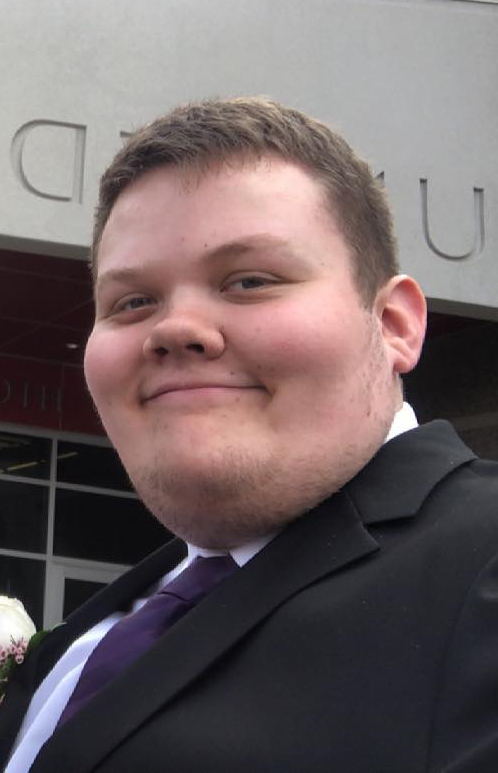
Two ILCC sophomores, an Educational Counselor, and the Dean to the Estherville campus, tell their stories, thoughts, and experiences with COVID-19 over the last two years and how its effects have impacted their lives, but also the future of ILCC.
Mitchell Hagenson and Nathan Schneider, both graduating ILCC sophomores, agreed that COVID-19 has proven to be a unique occurrence and that it’s definitely effected their experiences as ILCC students.
Hagenson, a student within the Digital, Social and Broadcast Programs program, says it’s affected him in numerous ways. “Ever since COVID-19 happened last year, I never got a chance to say goodbye to my friends who were at the college last year,” said Hagenson.
“The way that we learn; having to wear masks, sanitizing, it just brings a weird element to taking college classes on campus and online. Due to COVID-19, all the opportunities and the chances, last year, to get internships for the summer, were gone for our program, especially when trying to succeed as a broadcaster,” said Hagenson. “It was just a shame to see all of the internship opportunities that us as broadcasters had be taken away, due to COVID-19”
Nathan Schneider, a student enrolled in the Ag Transfer Program obtaining both his A.A. and A.S. degree said he wasn’t very concerned at first. “It felt like something that was just getting a lot of news hype,” said Schneider. “I felt that like all other news stories this too would fizzle out fairly quickly, so I didn’t give it much credit. It wasn’t until March that it hit me that this wasn’t just some news story, I realized that this event was actually going to substantially impact my everyday life.”
Schneider goes on to say that from his standpoint as a student, he was very flexible with this unique occurrence. “While I definitely do better in an in-person environment, I am perfectly functional on an online format,” said Schneider. “Homework did seem a bit harder for a while, but I got it figured out. I wasn’t getting the same value of interactions with my teachers.”
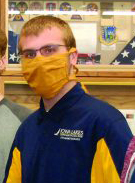
Schneider also noted that living, sleeping, eating, working, and entertaining in the same six feet radius everyday made him feel extremely stressed. There was no way to disengage, which made him feel very overworked. “I don’t think it impacted my grades though,” Schneider added, “it just took me way more time and effort to get the same result.”
Although both Hagenson and Schneider were greeted by COVID-19 in different ways when it became apparent this was a serious situation, both can attest that their overall ILCC experience has been influential.
“It’s been awesome, said Hagenson. “I’ve had the opportunity to meet some great people at the college. It didn’t matter if it was students, professors, the cooks, the Iowa Lakes staff, etc. everyone was great to talk to.” ILCC has proven to be a great experience to Hagenson, “The dorms were nice to live in, the classes were fun to be in, the events that the students would put were fun to be a part of, and the food was good,” Hagenson added.
For Schneider, it’s been a bit difficult, pointing out that most of his college career has not been at ILCC, but in his basement while sitting on his ottoman. Schneider goes on to say, “If it weren’t for the fact that I am president of the student senate in Emmetsburg, I doubt I would be on campus more than once a week for my labs.” “Anything that I have gotten to do has had to be done in a limited capacity,” said Schneider.
Knowing it’s not entirely the college’s fault that this unique situation COVID-19 has presented. There were various regulations that were set forth from the different levels of government to protect its citizens, Schneider goes to back that he does not, in any way, mean to blame anyone for this occurrence. “I hope that they can understand my intent when I say my overall experience at Iowa Lakes has not been particularly pleasant,” said Schneider. “I do not blame the college for this and there is little they could do that they aren’t already. It was just unfortunate timing to be in college during a pandemic.” Schneider concluded that one cannot really fix that.
COVID-19 has proved to be a force to be reckoned with and the destruction it has caused can never be fixed. During this time, Hagenson and Schneider still found memorable moments, positive and negative, that will be imprinted into their educational journey during this worldwide pandemic.
“The connections that I have developed is a positive thing I can take away from my educational journey,” said Hagenson. “It was awesome getting to have professors get to know me for not only who I wanted to be, but for who I really am. I never thought I’d have that big of a connection that I have had with the professors at ILCC.”
“The one troublesome occurrence was probably just getting used to doing our classes online, because of the (COVID-19) mainly,” said Hagenson. “We all ended up having to deal with this unfortunate circumstance happening in our world. It was just a bad time to deal with the online classes.” Hagenson said he is not really the best with online classes but going all online was a game changer to say the least.
Schneider’s memorable experiences are more focused on himself as a student and how his attitudes and personality contributed to his overall educational journey at ILCC. “If there is one thing that I learned in my time at Iowa Lakes, it is that I have a very durable personality.” “There were many times that the cards felt stacked against me, but I never gave up,” said Schneider. “I said I was going to go to college, and I made sure that commitment would be seen through to the end. Maybe it is just stubbornness.”
Quoting a line from the movie, “Independence Day”, Schneider was able to create a foundation to ensure his college experience was going his way, regardless of the challenges and personally relating to its words. “We will not go quietly into the night. We will not vanish without a fight. We’re going to live on. We’re going to survive. Today we celebrate our Independence Day!”
Schneider believes it’s a very empowering belief to think that you will succeed in the face of conflict. “It is a belief that I did not really have until fairly recently,” said Schneider. “I think I proved (at least to myself) that no matter the awful challenges life has to throw at me, I will always be there, standing firm to meet them.” Through his surroundings and conditions, Schneider says he will not allow either to control him. “I will control them,” said Schneider. “There is no force on Earth other than death itself that can take that away from me. I will rise to any occasion, and I will endure.”
Developing a unique ability to slip through the cracks at ILCC, Schneider didn’t seem to have the best of luck with his credentials. “Whether it was getting bills for books that I returned or just being missing from their tax system, wrong grades being put on my transcript, or false assurances that I had everything I needed on my scholarship application, there were a lot of things that seem pretty streamlined that just didn’t quite work for me,” said Schneider. “All were resolved though. It just seemed odd to run into so many issues like that, but I guess that is life.”
These two students were undoubtly faced with new kinds of challenges beside the ones that come with their program’s curriculum. Hagenson found that COVID-19 was wearing masks and dealing with online classes. “Obviously, we have to deal with the masks, because that’s what was keeping us safe from COVID-19, but we all would like to breath the air in the classroom once again, it would just be nice to enjoy the air around us instead of the air inside our masks.” “For the online classes, Hagenson continues, we all had to change the way how we learned for a while.”
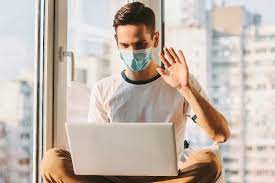
Nobody expected something like COVID-19 to happen, so for everyone to switch to online classes was a game changer to say the least. A lot of people don’t like doing online classes, they would prefer face-to-face classes instead. Hagenson felt this way when it came to the online classes.
For Schneider, it completely turned his personal and college lives upside down. “In all honesty, it was all kind of peaches and cream around March. We had lost my Aunt Brenda in January but other than that, things seemed great,” said Schneider. “I was around my family more since they were all on COVID-19 leave. We were doing many things together outside. My father keeps bees as a hobby and my mother takes care of chickens. I garden. It was happy and quaint,” said Schneider.
Schneider finished up his spring classes online. It took a bit to adapt, but he made it work. “I did work through COVID-19. I kept my job at our Country Club as a kitchen staff,” said Schneider. “I was a bit paranoid about this as it’s a one person does all type of job, prep, cook, clean, maintain type of deal. I thought for sure I would catch it cleaning dishes.” For all Schneider knew, maybe he did and was asymptomatic, Schneider’s not sure. “I also worked for the City of West Bend during COVID-19,” Schneider concluded.
Unfortunately for Schneider, things began to become gloomier. Around mid-June, Schneider received the news that his Aunt Julie was losing her battle with cancer. “Shortly after Julie passed my Great Grandpa Maynard passed as well. We barely had a break from his passing when Nana (my Great Grandmother) was diagnosed with brain cancer. This was devastating for me,” Schneider said.
“Nana had always been an important figure in my life,” Schneider continued, “out of all my great grandparents, she was the one I had the strongest bond with.” “To hear that there was nothing they could do, it just didn’t seem possible that it was actually happening,” said Schneider.

As the saying goes, “There isn’t no rest for the wicked” as less than a week later, college was staring. “Not only was it my most packed semester class wise with two of the hardest classes I have ever taken, but I also now had the responsibilities of being president of student senate as well as my jobs at the City of West Bend and Country Club, COVID-19 adding an extra layer of complexity to all of those. I was a textbook example of stress. My hair even started falling out,” exclaimed Schneider.
“Growing up I had very different interests than the people around me. This caused me to not be very socially productive,” said Schneider. For the longest time Schneider blamed those that were not so friendly towards him, but he now realizes that he wasn’t really helping himself all that much. “College was going to be my fresh start,” reassured Schneider. “I was going to learn about and build new relationships with people, the kind that I had always wanted. My first semester I had a wonderful start.” Schneider learned to get over a majority of his anxieties and he was making friends. He was very pleased and was having so much fun getting to talk with people. “There was a part of me that started to feel fulfilled,” Schneider added.
“Then COVID came, I lost all of my interaction,” said Schneider. It didn’t feel fair to work so hard for something that Schneider had wanted for so long, just to have it taken away from him when he finally had it. “Yes, there were my coworkers, but that’s not the same. Yes, you can be friends and friendly, but you are in a professional setting,” said Schneider. “For being “the best years of my life”, Schneider said he was able to do extremely little, and that kind of upset him.
A student’s learning environment says a lot about them and how they take in information, and what is it they need to know in life, whether it’s school, work, or play. With COVID-19 effecting the quick change in learning environments at ILCC, Hagenson and Schneider can agree that the new policies and virtual learning were definitely force upon them quite quickly.
Hagenson goes on to say that “Some of the things that changed as far as my learning environments and teaching methods were probably having to wear masks, sanitizing regularly, and social distancing between classmates.”

Schneider goes into more depth on his impacted learning environment and what that means for various mediums. “Environment wise, I went from seeing people every day and going from classroom to classroom to sitting on my ottoman in my basement.” “I’d go upstairs but my mother works from home, and I don’t want my classes to disturb her.” Schneider’s learning methods changed a great deal. “Before I preferred to work,” continued Schneider, almost one on one with a teacher in a conversation type format. I still find this to be the best way for me to retain knowledge.”
“Now I focus more on teaching myself. Digital conversations kind of annoy me in a way,” said Schneider. “I get the information, but I feel like I’m just talking to a screen. To be honest it makes me feel a bit lonely. The upside to online learning is that your homework can be standardized easier.” Schneider didn’t have to worry about writing a physical paper with his poor spelling and penmanship or combining different mediums. “Online learning makes doing it easier,” Schneider said, “but learning it is harder if that makes sense.”
After adapting with the switch changes in where Schneider and Hagenson initially started out as, both students have found that their learning styles changed due to COVID-19. Schneider confidently can say it has, 100% made him much more self-reliant.
Hagenson strongly believes that even though students were eventually going to do online classes at the college, He just didn’t think they would have to do so many online classes, because what is going on in our world today. “COVID-19 changed the way of how we going to be taught at Iowa Lakes the last year, having the classes being changed to online made it different for a lot of us to learn from, so I would say it changed how we were learning at ILCC.”
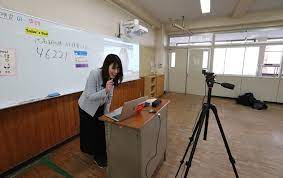
It goes without saying that ILCC has had some repercussions since COVID-19 began. Schneider foresees that his life, post ILCC, will meet some of these repercussion. Hagenson’s repercussions are the complete opposite.
“I have already decided to take a year off of college because I want to know beyond a shadow of a doubt that the next time, I attend a class, it will be in a physical classroom,” said Schneider. “At least a little normalcy would be nice.”
Money has always been a major concern to Schneider. “I managed to work my way through college at Iowa Lakes and end up debt free. I would like to build a little cushion before I start at a bigger college,” said Schneider.
Hagenson, on the other hand, said, “No, I don’t believe that the repercussions of COVID-19 will impact my post-ILCC journey, because we will eventually all get through this together.” He believes that everyone will, sooner or later, get vaccinated and things will be getting back to normal. Hagenson believes, “It’s just a matter of time.”
It has been challenging to see how the fields of employment are drastically effected by COVID-19. There is a possibility that graduated students may find this task difficult due to these setbacks. Numerous people have seen their own jobs terminated or let go due to the outcomes. Schneider and Hagenson give us some insight to their reasons why they believe their lives will be impacted after graduating and trying to earn real-world employment.
Schneider believes it’s not going to be hard. “There are many places hiring right now, the kicker is trying to find someone who pays a living wage and values your degree. That, I am not so confident about.”
Hagenson sees this as a challenge after walking across the stage to receive his diploma. “It is going to be challenging to say the least, because for our in program in particular, the broadcasting field hasn’t really been popular lately.” A lot of opportunities and internships were taken away, because of COVID-19.
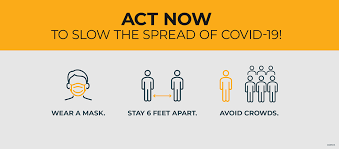
“Things might be different now, because we all are going to get vaccinated soon, but I do believe it is going to be challenging,” said Hagenson. “COVID-19 really did mess up the opportunities and internships that we could’ve had last year due to what has been going on in our world today.”
One thing that is for certain is that COVID-19 has impacted virtually everyone, even the various stages of mental health. Students, faculty, and the administration, have witnessed the stress that has drastically changed their daily lives which cause them to revert to completed new routines.
Interestingly enough, Schneider and Hagenson, both have contrasting perspectives on how COVID-19 has effected their mental health while attending ILCC. Schneider goes on to say, “Not being able to socialize has really driven me crazy. I constantly feel stressed and unrewarded.” Schneider believes that the word that would best fit this scenario that he’s feeling is that he’s toiling. “I have started driving more to help relieve the aspect of working for the sake of working and not really getting anywhere.” It’s a good feeling for Schneider to just get out of the basement.
Hagenson believes that his mental health did not drastically change to all of what’s happened with COVID-19. “I don’t believe it changed my mental health, even though I haven’t gotten my second shot yet, I believe that getting these vaccines are just like getting the flu shot.” He continues, “We all had to get them to make us feel better and to keep us from getting sick from COVID-19, and I really don’t believe getting vaccinated will affect my mental health.”
There will be a day when COVID-19 is a thing of the past and what will remain is the history of what everyone went through. Taking a look at the possibilities on a timeline from five to 10 years from now on how COVID-19 will impact future ILCC students.
Schneider says he honestly doesn’t have a clue on how it will impact us, but he knows how he hopes it will. “My hope is that we will look back at COVID-19 as a reference point.” “It’s an example of how life can always be worse than it is.” He hopes that it becomes a point of commonality between people as a unifying force.
“I hope that people remember what we went through, so we can grow into the people that we need to be.” Schneider also hopes that it will inspire people to see their inner strength. Although he cannot say how this will turnout, Schneider is sure that we will all have a different take on life after this pandemic.
Hagenson believes that it will affect the future of ILCC students by making them realize that they should take things such as COVID-19 seriously. “In our world, no matter how many roadblocks or bumps or curves there are along the way, we will get through this because that’s what life is all about.” Hagenson continues, “It’s about dealing with every challenge in our world and no matter what challenges are in our way we will always prevail.”

With everything that has been gathered from these two students’ perspectives, taking this scenario to another level toward mental health is a huge focal point to COVID-19 as a whole. Kevin Range, who has spent the last 38 years within the educational system and this semester being his sixth one as an Educational Counselor to the Estherville campus.
Range has seen numerous mental repercussions over the years, but COVID-19 made the 2020- 2021 school year the most stressful year he’s seen in his 38 years. Ranges goes into detail on this matter, “When the pandemic began, my feeling was that this would be short-lived and by fall 2020, things would be similar to normal. Was I ever wrong! It didn’t take long before I was “Zooming” in virtual meetings with students about anxiety, stress, and isolation issues.”
Range said that by the time the fall semester came around, students started hoping for the normal college experience, but it was far from normal. Right away, Range had students contacting him about isolation and mentioning anxiety. Students didn’t feel connected to one another in virtual classrooms when not able to be on campus.
“I had one student in November that made an appointment to see me face-to-face with masks and in my socially-distanced conference room. He said it was just to visit the campus that he had never physically been to the campus, since being accepted,” said Range. “Orientation had gone virtual; classes were virtual; even most of my meetings were virtual.” The student communicating with Range was excited to see our campus, but as they talked, this student revealed his isolation story and a feeling of being disconnected from society.
Range was to share the similar story over and over for the next six months. Among some students, the feeling of isolation continued to escalate into stress and anxiety to some very destructive thoughts. Range goes on to add, “We are social human beings, and we crave connectedness. The pandemic proved, in my mind, that we truly need each other.”

Obviously, there was a change in learning environments. Going from face-to-face classes to online / virtual learning effected both students and faculty’s mental well-being. Range couldn’t agreed more and then some. “The pandemic had an effect on so many aspects of our lives. Here are my impressions from discussions with staff and students.”
“There was a learning curve for everyone switching to the virtual learning environment,” said Range, “and it seemed to happen overnight. One day we were face-to-face, and the next, virtual.” “Luckily, we had the technology, the technology department’s support, and the willingness of our staff to make that pivot,” said Range. Everyone thought it would be short term. It was not.
The faculty got better with their delivery of content through technology, but many still expressed the desire to meet face-to-face with their students. “We ALL wanted the connection with our students. Virtual learning lacks a certain degree of connectivity,” said Range. Some students attended both types of classes.
“In talking with one instructor that still had face-to-face instruction, they mentioned the students did not interact with each other like they did before the pandemic. The students knew each other’s names but did not socialize in the class like they did pre-pandemic,” said Range.
The pandemic has had lasting effects on both the staff and student’s mental wellbeing. Isolationism is a feeling of loneliness which takes a toll on everyone. Range equates our college to a family. “When we cannot see our family members for long periods of time,” added Range, “we feel sad, lonely, and disconnected. These feelings lead to diminished mental health. We saw an increased number of cases of anxiety and depression this year.”
To help combat these mental tendencies, the college provided services to help students and staff get into a better mindset and it seemed to have an effective outcome according to Range. The Educational Counseling Services are on the Estherville, Emmetsburg, and Spencer campuses providing services that include academic, career, and social services.
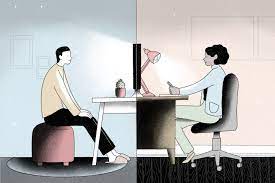
“This year we also added a Teletherapy component and a peer-to-peer communication service to serve students 24/7,” said Range. “In October we had the opportunity to write a grant, through the Northwest Iowa Cares Connection, to fund these services. We researched about 30 mental health online services from across the world.”
The best fit for Iowa Lakes Community College was Talk Campus, a peer-to-peer app that allowed staff and students to communicate with others that were experiencing similar mental health issues. Range added to how this service works, “A supercomputer monitored student language for words that indicated a person needed more intervention. Trained staff then would take over and make referrals,” said Range.
“ILCC, through the grant, also hired eSynergy,” added Range, “a teletherapy company out of Minneapolis, MN with therapists in Iowa.” Students could log into the eSynergy website and self-refer for therapy or an educational counselor would refer students to the site.
These teletherapy services were invaluable and timely. Our local therapists were overwhelmed with patients effected by the pandemic. There was a wait time, could be weeks before students and clients wanting to see a local therapist could do so. Through the combined services offered by ILCC, students could receive help within minutes to a few days.
Range hopes from his perspective that although COVID-19 will have effects that will be drastic in the years to come, he does foresee glimpses of hope after COVID-19. Range goes into further detail, “The effects of COVID-19 will be long lasting. Change has happened. I also believe that life will get back to a SENSE of normal by fall 2021.”
What changes will become the norm? Will some of our classes remain virtual? Will students reconnect to establish a more normal college experience? Will everyone continue to socially distance out of continued fear of COVID-19? Things have changed, and Range is not sure what normal will look like or feel like, but life will be different for a while. “My hope is that we find our peace and happiness – our joy again,” concluded Range.
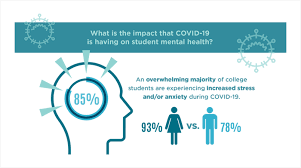
Range goes into further detail about what he was seeing from his position as an educational counselor when COVID-19 was at its peak almost a year ago. Range goes on to say, “I was scared this year. Scared for the students I counseled and referred. There were too many dark thoughts among them.” “Thoughts that kept me up at night wondering if I said the right things or did enough for this person or that person. Did I get to this person in time? College is stressful enough,” Range wondered. When one adds anxiety and depression from the pandemic, it could send the strongest ones down a dark path.
Although the pandemic is still ongoing, Range provides pieces of advice as an educational counselor that could help others in their time of need. Range advises, “Sleep. Exercise. Eat healthy. Limit your social media time (one hour/day). Check in on the ones you love and the ones you think need some contact.”
Range believes that within five to 10 years, COVID-19 effect will definitely impact the future students at ILCC, as well as the outcomes will pose as an historic event. “I told the staff last fall; our college students will be talking to local elementary school students about the pandemic of 2020/21 in 40-50 years. My hope is that these students will talk about the compassion they showed others and the needs they had to stay connected physically and emotionally,” said Range. We as humans have grown from this experience to be better stewards of our society.
Even Scott Stokes, Dean to the Estherville campus, weighs in on how much COVID-19 has effected everyone under his supervision. Stokes definitely saw that COVID-19 was something that was different than anyone has ever dealt with before. Stokes believes everybody at ILCC and that of our daily lives can attest that a lot was different.
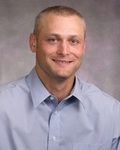
“We really rely on the guidance from the CDC and public health to make our decisions,” said Stokes. “You want to be focused and always look out for the safety of our students and employees based on those guidelines that we received,” Stokes later added.
When ILCC developed its plans, the most frustrating part was many times those plans, a day or week later, changed based on the guidelines because they were continuously being altered again and again which was something that everybody was trying to adapt to on a regular basis.
The biggest thing that Stokes thinks is the hardest out of all of this is the unknown of any constant change of what was going to happen in the near future with this pandemic. “We are continuing to rely on that guidance from the CDC and public health on what and when we can transition back to normal”. “We have a tentative plan for the summer to gradually return back to the way things had been and that’s kind of what is to be figured out throughout the summer break.”
“The plan is based on everyone having the opportunity to get a vaccine, and once that has happened, we hopefully will have our doors open to the public and everything will be back face-to-face and hopefully no face masks or anything of the sort,” said Stokes, “That is our plan.”
It’s crazy to think about ILCC, as a whole, what measures it had to go through to protect everybody on all five campuses. For the Estherville campus, Stokes had this to say, “Based on the guidance we received, obviously last spring we shut our doors.” “We did what pretty much every business did and at some point during that time the governor of Iowa came out saying everything needs to be shut down and that was the guidance that we were receiving from the CDC and the public health,” Stokes added.
Stokes says that all the courses went online, which meant instructors went home to teach and students had to find a device to continue their online learning. “It wasn’t a good situation,” said Stokes, “but that was the only thing that could be done at that point.” Stokes believes that the spring semester of 2020 was the hardest for everybody at ILCC.
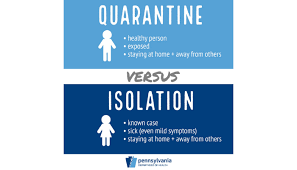
Stokes mentioned that it was one day they were trying to figure out and prepare everybody for questions like, “What if we had to transition to not being in our building?” To not even having time to do that.
“We were a bit lucky because we had spring break in there during this time and a lot of these changes were happening so fast over spring break, rather than everybody being in a classroom when everything was happening,” Stokes added.
Stokes went into detail that there were a lot of phone calls to instructors constantly and possible situations of, “This is what we’re thinking one day and then the next being, well this is what we’re doing instead.” While all trying to get these situations communicated over to the students. “Obviously, last spring it was everything,” said Stokes.
Stokes mentioned that when ILCC went all online, there was a lot that was asynchronous because it was just the timing and how everything was working for fall. It was at that point they realized they had a bit more time to plan their situation as far as how COVID-19 was effecting the world. It was at that point where the question of, “What was it going to look like?” was a constant thought.
Stokes goes into greater detail on this, “We had more guidance and so we were able to do a combination of face-to-face and then some of the virtual for our larger arts and science classes and with the face-to-face on our campus, we were able to really work on social distancing and utilized the bigger classrooms that are fourplex areas and convert them into two classrooms. They were really big and we could measure out the space between our desks and the seats and that social distancing was enforced and having the face coverings for everyone and at our facility was one of the things that we did based on the guidance we received.” With that said, obviously, ILCC took many precautions at that moment in time.
The facilities management and ILCC updated what needed to be as far as cleaning supplies. “They purchased some new equipment,” said Stokes, “purchasing equipment that fogged the rooms and the disinfectants they were using really lasted on the surface to really kill COVID-19, and everything that might be on the surfaces that are going to be touched by students, instructors, or employees.”

Dee Hiney, the Facilities Management Director, was seemingly on top of everything pertaining to COVID-19. “As soon as everything started happening, Hiney really started working as she’s in charge of these kind of things that happen, especially situations that can be considered college wide disaster,” said Stokes.
Hiney is in constant meetings with the Emergency Management in all five counties that ILCC covers as well as with public health. Hiney has also been able to start really looking into purchasing the equipment the Janitorial Department needed for supplies. “Some of that wasn’t immediate,” said Stokes, “but being in right away, we were one of the first to probably get most of what we needed as far as disinfectants and cleaning supplies.”
Stokes said that when the door shut, this was the time for them to really start using these new purchases. “Basically, they would shut the door with a sign that would say, “This room has been cleaned.” Stokes also added that there was more terminology that they used for disinfectants pertaining to COVID-19.
“Dee was really on top of it and did a great job,” said Stokes. Hiney really helped with the overall planning and was always in contact with public health.
ILCC has many people within its buildings and campuses, with that Stokes was able to gather some feedback on how everybody perceived COVID-19 and how the college itself handled the limit of spreading to keep everybody safe.
“We had two main contacts; Julie Williams, our Dean of students, was the contact for students and Kathy Muller, the Director of Human Resources, was the contact for employees.
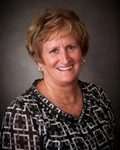
“In my opinion, said Stokes, “the college has done a very good job on limiting the spread. I know one point in time we tracked every employee and student that was in contact with us, even with symptoms, they were tracked and when we were contacted, Julie Williams or Kathy Muller, would reach out to public health and then public health did all the contact tracing.”
Stokes goes into detail that once the college had contacted the students who did contract COVID-19, they would ask the big questions like, “Who were they in contact with? Were both wearing face coverings? and etc.” Stokes recalls that sometime in the fall, the college didn’t have any documented cases of COVID-19 that spread within its facilities.
That goes back to having the procedures and policies in place, but it also says a lot about the students following those policies and procedures in that the employees we’re doing the exact same thing as well as encouraging students continue to follow what ILCC had in place.
“As we had positive cases, the spread was really due to having been in contact with someone who was positive outside of our facilities,” said Stokes. That is what ILCC basically saw was happening in most cases.
Obviously with athletics going on, ILCC had some students who were in their dorms and some places around the campus probably were really hard to prevent when someone is living with somebody that was in a possible positive contact scenario. Otherwise, besides those possible areas, Stokes strongly believes that for, the most part, the college has done a very good job maintaining those areas that could pose as possible hot spots for contamination.

With the constant changes from the CDC and public health, ILCC placed new COVID-19 policies. The big question is what do these policies mean to everyone involved at ILCC. Stokes believes that they are finishing the year pretty much as they started, so the COVID-19 policies that they had in place, they are going to finish with this year.
“That just goes back to really working with public health and what their guideline is and there are a lot of places that are loosening their restrictions,” Stokes has seen. “We want to finish the year with the same policies we have in place,” said Stokes. Throughout the summer there will be timelines that the college will try to meet as far as if vaccines continue at the rate they are, which they seem to be, and that they’re going to gradually get back to a kind of normalcy by the time students come in the fall.
All in all, for Stokes and everybody at the Estherville campus, they are hopeful that it is going to look like it was two years ago and not like last year. “I think the vaccine has been proven to be extremely effective which is such a good positive,” said Stokes.
With all the policies and regulations that the college has seen throughout the last couple years, it all comes back to how the college itself handled COVID-19 and how its procedures effected students and their learning environments.
This is what Stokes had to say on the matter of rapidly changing environments for student learning, “We really rely on the guidance from the CDC and public health to make these decisions. Our focus is the safety of our students and the employees.” Last spring the college went completely online so they were very fortunate to have the learning management system, Canvas.
“We had a course set up for every single course that we offered, whether it was a face-to-face, hybrid, or online course.,” said Stokes. Anybody who had a face-to-face course, was already a part of Canvas’s shell or core setup which is what the instructors already had to do to enter grades. As far as the conversion from various learning environments such as face-to-face or online, transitioned smoothly through this learning management system.

“The grade book is out there and then some of them use Canvas as a supplemental,” said Stokes. Instructors might post videos out there and there were a lot of those who used it only for the grade book; no matter what the scenario, ILCC already had this contingency working in full force.
Stokes believes that through the transition, Canvas is a major tool that could be used to easily switch the direction of students who were on campus for total online learning. “We couldn’t have them come to our facility in our classrooms for face-to-face learning, so this is why this plays such a big role,” said Stokes.

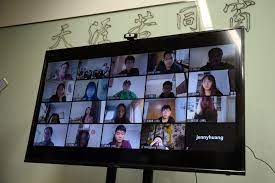
“In virtual courses, we had time and found that some instructors, instead of going kind of asynchronous online, were using Canvas courses for everything. They still use the Canvas course, but they kind of kept some set days and times to have courses virtually by using Zoom,” said Stokes. The feedback the college was getting from students is that students preferred this learning environment.
As Stokes and the college looked ahead to the fall of 2020, they wanted to ensure that there was availability for face-to-face classes and that they needed to provide those face-to-face classes to be virtual and have no set dates and times, just like they would if students were coming to the campus.
“We would use Zoom and Microsoft Teams to have those classes LIVE even though it was virtual, but having the LIVE class time was kind of the colleges strategy for that,” said Stokes “We had positive feedback from students on most classes and then the face-to-face courses, obviously face coverings and social distancing, we’re really glad that we were able to get our technical and hands on programs back to our campuses while still enforcing the social distancing and face masks so that students could get back doing to what they wanted to do,” said Stokes.
“You can watch videos on different subjects where you can learn what it is you need to, but to actually get your hands on the camera and know how to set it up and anything like that is physical, it is much needed,” said Stokes.
From Stokes’s perspective, he believes that the transition of a student’s learning environment had an effect on their mental health. He goes on to say, “The biggest thing is we were all taken from coming to campus and interacting with people to being stuck in our houses and everything being closed or shut down.” Stokes believes that concept impacted everybody, and it probably impacted everybody in different ways.
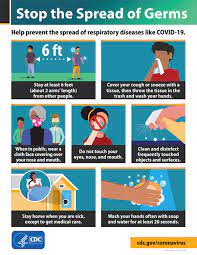
Some people are very social, and some aren’t, a good example of that is the feedback that we got from students. “Going from face-to-face just an online format where you’re learning asynchronous and not really having solid communication with others, this is a big role in one’s mental health as humans,” said Stokes. “Maybe you’re doing chats where you’re giving your feedback on a topic and maybe giving feedback to what others have commented on, but the feedback the college was receiving, instructors were able to keep material moving in a virtual format with that set date and time, which students really appreciated,” added Stokes.
People need that interaction; they need to see others and one needs to be able to talk to another person. “I think that is a big part of everybody’s daily habits and life,” said Stokes. “Kevin Range is huge with always working with students and knowing how students are doing.”
The college was able, through the Dean of students, work with her staff as well as with Range, who played a big role in this, work to provide some online mental health tools for students. “That was a big step and we’re really happy that we were able to do that, so hopefully that has been helpful for our students who may need some help in that area,” said Stokes.
With both students and faculty in terms of preventing a large spread, Scott weighs in on if anything has been ineffective since enforcing their COVID-19 policies. “Yes, I think we definitely prevented a large spread based on the COVID-19 policies we implemented, and we really appreciate everything our employees and students did to follow those protocols,” said Stokes.
The college understands that it’s not been easy and not everybody agrees with the kind of guidance and policies that are in place but, as a whole, ILCC has to do everything they could to ensure the safety of its students and employees and for them to follow the guidance from the CDC and public health.
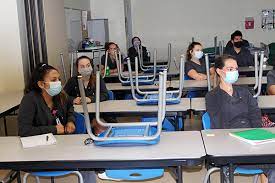
Have students gained what they need to be successful through everything they’ve gone through during their academic life at ILCC, Scott believes that the spring semester of 2020 was the hardest. “We were in the middle of a semester and we had no time to prepare,” said Stokes. “Trying to finish students off and provide them every single thing they would have been able to gain having finished out the semester face-to-face was a challenge. “
Stokes thinks their instructors the best job they could possibly do by using their learning management system to ensure that instructors met all the learning outcomes they needed to meet for their students.
“Obviously some other programs where they had to get their hands on things was difficult to do,” said Stokes. “I think having this summer to prepare for the format we are going to be in for this fall and spring brings about a confidence that we were able to do everything that we needed to do and would have done if we were face-to-face.” Stokes believes that their instructors knew what they needed to have in place and then move forward with whatever they wanted to do face-to-face. “Instructors knew social distancing and face coverings were a big factor for them to be able to plan appropriately,” said Stokes.
Stokes thinks it was very difficult when everybody needed to completely change their semester plans that they had been going along with for the past couple months to quickly reverting to a whole new learning environment from home. Yet, Stokes feels pretty good about the instructors and that they were able to get students to the level that they needed to get to be successful even if they weren’t able to do every single thing they wanted to do because of the format they were learning on.
With the COVID-19 pandemic being one of the most historical events that will happen in history, Stokes discusses how the current status of COVID-19 will or will not have an effect on future ILCC students who will enroll in five to 10 years.
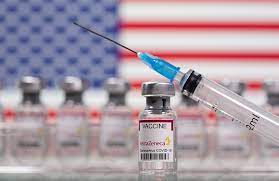
“The tentative plan is to transition back to normal over the summer to gradually get back to where we were a couple of years ago is kind of based on the vaccines,” said Stokes. ILCC believes that it’s moving full speed ahead in the direction that they need to stick to this tentative plan.
Stokes believes that there are definitely some positives that are going to come out of having to being forced into a situation that none of us wanted to be in. ILCC employees and instructors were forced to use technology more than they ever had to in the past. “We had instructors that viewed that online learning and using the learning management system, Canvas, was something they weren’t interested in learning how to do, until they were forced to be in that environment,” Stokes commented.
Whether instructors taught completely online or not they now know how to use the learning management system to teach their courses. Even if they’re teaching all their courses face-to-face, the learning management system might be something that they will use as a supplemental as part of their face-to-face teachings. They might be able to have students submit assignments through that.
“I think there’s definitely some positives from the learning environment and our instructors, but also, our departments were able to not even be on campus and virtually work together to keep our daily operations going for the college,” said Stokes.
All of the college’s meetings ended up being via Zoom and in Microsoft Teams. Is that the way the college is going to continue forever? No, they’re still going to have face-to-face meetings because there are things that you can’t necessarily accomplish as well as you can in a Zoom meeting. “As we have five campuses, being able to meet virtually and not have everybody traveled to the campus does save time,” said Stokes.

If you have to travel half an hour to get to a meeting and half an hour back there’s an hour out of your day so it does definitely save time. Besides time, it also saves on travel expenses. “I foresee we’re going to have quite a few virtual meetings yet and some face-to-face, probably a good mixture,” Stokes commented.
The college probably had never really looked into doing that before because sometimes one doesn’t change unless there is a reason to change.
“We’re just going to status quo,” said Stokes. “This made us look at things differently and now having a different perspective going forward is going to help us be more efficient in what we previously did,” Stokes observed.
Stokes, himself, is looking forward to when he can meet people in the hallway and not have his face mask covering his face, especially when visitors come to the campus and shake his hand. “That is harder for me because I like to welcome people and have a smile on my face. It is hard to feel like I’m not very personable, while having something covered my face and doing so has been a struggle for me,” Stokes concluded.
It goes to show that COVID-19 has definitely left an imprint on daily life around the world. One thing’s for sure especially with ILCC, it will prevail with whatever lies ahead for its students, faculty, and administration. It’s been a rough couple years, and as Stokes mentioned it’s hard for someone to break or be forced into doing something in such a rapid timeline.
For this year’s graduating students at ILCC, the best of wishes and luck go with you as you end your educational journey and walk out into the world. Although many members of the faculty and administration will remain, the effects of COVID-19 will forever be with us during the 2020- 2021 school year.
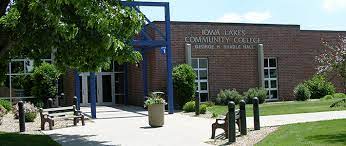
ILCC has done its very best to put forth everything it can to ensure students, faculty and the administration were able to endure this pandemic in the safest and most understanding environment. Whether providing mental health services or creating learning environments that continue to provide material that is needed for students to be successful, it definitely goes to show that ILCC goes beyond what they deemed right for everyone and continue to do so as this global pandemic slowly starts too dim.
 Call of the Lake
Leave a comment