
Morgan Larson, Writer
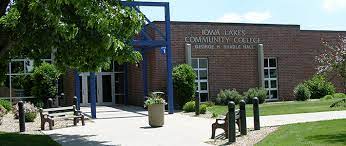
Iowa Lakes Community College (ILCC / Iowa Lakes) provides a vast array of programs that help meet the needs of various job opportunities that are seeking potential employees. ILCC goes to great lengths to research, analyze and construct possible programs that are hot employment options. How does a program get established at ILCC?
What goes into finding the courses, instructors and overall curriculum that help area job opportunity flourish with graduates that are educated in their highly needed work environments? Although it can sound like a complex, timely process, ILCC strives to provide such programs.
Scott Stokes, the Executive Dean to the Estherville campus and Kevin Tlam, an adjunct and advisor for the Digital, Social and Broadcast Production program took time out of their busy work schedules to share their perspectives on a programs creation and how it contributes to ILCC.
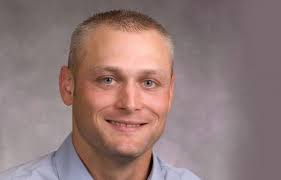
ILCC Estherville Campus
Scott Stokes helps explain the initial startup to a future program. “As far as new programs, you’re at the administrative or cabinet level, said Stokes. “We’re always looking to see what programs there might be a need for and when we’re looking at that, are there jobs available? We want to be providing programs to our students where they can get a good paying job.”
Stokes goes on to say, “We want them to be able to have a good healthy living wage. We’re looking at that and a lot of our programs sometimes start on the noncredit side, so we have business and industry that are reaching out to us that are requesting training for their employees or the individuals who they’re trying to hire.”
Sometimes something might start as a noncredit training, this is when ILCC realizes that this could be something bigger and could go from a noncredit program to a credit program. It enables students to come in and take that particular curriculum and get that good paying job.
Within the groundwork of a new program’s establishment, questions like “Is there a need for the program? Are there any jobs available for graduates? What does the program cost?” are all factors need to be considered.
To get the program started you must factor in the equipment that may be needed, the location in which it will be taught which sometimes can take up a whole facility. Stoke goes on to say, “We have to be able to afford to start the program and then maintain it once we do that as well.”

The college looks at and try to figure out if are there other programs in the state, because to go through the process, the Iowa Department of Education is also involved in the process when ILCC looks to get approval for the program.
“First off, if we determine that we can afford the program, there’s a need. And we’ve worked with business and industry to determine that they do need employees that are trained and to have a degree,” said Stokes. “We would first get approval from our board, the Iowa lakes board of trustees, and they are the ones that get to have the say of whether to move forward with starting a new program or not,” Stokes added.
Once that gets approval the college then creates an advisory committee. The college then seeks out individuals within particular business or industry fields that can help form an Advisory Board. These individuals are the ones that provide the input on what the curriculum will provide its students in order for them to leave Iowa lakes with a degree and have that appropriate training for that specific area.
The individuals that are a part of the Advisory Board play a huge role in building the curriculum, what equipment is going to be needed, what kind of technologies students are going to need to be trained on, and the list goes on.
“Once we kind of have our ducks in a row on our end, and then we’re really seeking the approval at the state level. There is a listserv that has all of the colleges in Iowa and they have a chance to kind of critique or voice concerns,” said Stokes.
Stokes goes on with an example of other programs that may not provide a vast job market. “Let’s say we’re looking at a particular program that there’s not going to ever be very many jobs in Iowa, and there’s already two or three programs that exist and they’re having trouble filling their programs with students. It might not be a smart idea for us to start that program here because there’s already opportunities for students to go and do that program,” continued Stokes.
“There’s not going to be very many jobs in the state of Iowa. We wouldn’t make a lot of sense to kind of spread so thin and provide a lot of programs when there’s never going to be a lot of opportunities for students to get jobs. It’s interesting, as you look at it, there’s a lot of things that actually go into, do we start a program, don’t we? And then how do we get started,” concluded Stokes.
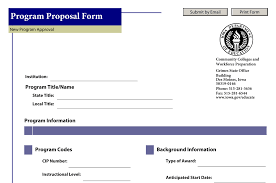
With the advisory committee playing such a huge role in the curriculum’s development. At the end of that process a document called a “AS28”, is submitted to the Iowa Department of Education. Once that is approved that allows Iowa Lakes the ability to offer the program. “The AS28 basically lists all of the curriculum, that students have to complete in order to get the specific degree listed on that AS28. For instances, an Associate of Applied Science Degree,” said Stokes.
A good example of this degree is the Heating, Ventilation, and Air Conditioning (HVAC) degree. Once the college has that approved from the state of Iowa, the college can at that point market and advertise that degree for students to apply to get that degree within Iowa Lakes. It also allows individuals to become students and offer the basis of the curriculum and grant degrees.
With this understanding, it’s easy to see that many people are a part of creating a new program. To understand why the college needs to have so many people involved, Stokes had this to say, “I think part of it is to make sure we’re making the right decision.”
“We don’t want to start a program that hasn’t gone through all those steps, we end up saying, Okay, this wasn’t a good decision, because it’s always going to cost money to start a new program. You’re going to have to have the equipment, technology and obviously, have to hire a program coordinator and instructor or maybe more than one instructor to make sure we’re making the right decision, I think is probably the best thing,” said Stokes.
The college wants to make sure that part of the decision is to have the right curriculum, equipment, technology. Having these experts from the industry, or a particular area, is key. Stokes couldn’t agree more with those reasons.
When considering these individuals, challenges can arise when one is part time compared to having someone on campus full time. “I’m the same way,” said Stokes, “if we had that one person that was full time, we would also miss out on the specific experiences that each of those individuals is experiencing every single day in their current role and then bringing to the students here Iowa Lakes.”
Stokes loves the setup Iowa Lakes has now, although at times it would be great to have one person there all day, every day, but he feels that one can miss out on the expertise that each one of those part times can bring to the program. “It’s kind of a give and take a little bit,” said Stokes.
Once all of that has taken place, the college goes about finding instructors to teach the core courses towards the new program in a similar. Stokes adds with, “Once we know what the curriculum is going to be, we work to create a job description.”
If there’s one position, a job description, the college would need to create job descriptions. It would create what would be put into detail what courses that instructor would be teaching, their responsibilities, if that person is going to be a program coordinator, being charged of working with the advisory committee, and keeping the curriculum up to date.
Stokes goes on to say, “Once we had applications, we would screen those applications and then interview the top candidates and hire the best candidate we possibly could to teach courses and run programs for us.”
As Dean to the Estherville campus, Stokes went into detail about which program was the most recently added program to go through this process. “I started in 2003 and I worked here until 2017. I worked at Estherville Lincoln Central High School for two years. I came back to Iowa Lakes in July of 2019.” When Stokes returned to the college, ILCC was in the process of developing the Cosmetology program on the Emmetsburg campus.

“Tom Brotherton, the Dean on the Emmetsburg campus would have worked on all of that, I just have kind of been in on different discussions that they’ve had here at the tail end of that program,” said Stokes.
When Stokes was Dean of the Estherville campus, the new program at the time was the Heating, Ventilation, and Air Conditioning program, (HVAC), to which he was immensely involved in it development.
With what has been learned about this entire process, it was applied to this program’s start up. “We kind of checked to see if other programs are out there in the state. Is there a need for it? There definitely was a need when we had individuals from business and industry telling us we could not graduate enough students to fill the positions that they had,” said Stokes.
The college then got the advisory team together and went through the questions of “What it would cost? Can the college afford to start this program?” The interesting thing about the HVAC program was that it ended up being in the circuit building because students could take their electrical courses and some of the courses that the college already had would be some of the core courses.
“Students would take more specific HVAC courses as they got further along in their curriculum,” said Stokes. “It fit very well with what we already had, and we were able to kind of move through the process and approve that program. The HVAC program was up and offering classes in the spring of 2013.
With the HVAC program being the most recent program to be established on the Estherville campus, from Stokes’s perspective, if the program is faring well in both its curriculum structure and the overall purpose of the program. Stokes had this to say. “I’ve been looking at HVAC, yes, it has,” said Stokes.

“The hardest part about some of our programs is recruiting students into them, just because how they perceive that job. A lot of times high school students are looking and everybody’s telling them to go get a four-year degree or go to this profession or that profession. Sometimes it’s hard to get students to even take an interest in it,” said Stokes.
Stokes believes that a lot of times you can get students to have a conversation or watch video on what HVAC technicians do. “it’s not necessarily a dirty job there,” added Stokes. There’s a lot of technology that is involved within this program. There are ways that things can be programmed and even controlled electronically through Wi-Fi which makes this field even more fascinating.
The process has been slow to get more students interested into that program, but it has grown and the college, presently, has seen decent numbers. Stoke adds to this growth, “Students are able to get jobs because they’re out there and they’re trained with what they need to be successful.”
HVAC students do internships, and a lot of times they get hired by the places they do internships with just because they realize the skill set that they have and that they would be very good employees.

Although the HVAC program was the last to be touched by this process, Stokes was able to provide a glimpse into what’s instore for a possible program addition. Even if the college always has programs in mind, going back to noncredit classes, which set the basis for actual programs, Stokes had this to say, “The most recent concept that popped in my mind are drones. Our aviation instructor, Tim Bush has taught some drone classes on the noncredit side,” said Stokes.
ILCC looks in to see if the drone concept could become a credit program., If there were enough training that would lead to the full credit side? Is there just some training that students would need to operate a drone? Drones are becoming more involved in numerous employment fields.
“It’s vast, from agriculture to transportation, deliveries, your law enforcement and rescues even just taking pictures. I think that’s an area that we’re continuing the noncredit,” said Stokes. ILCC is always looking at the feasibility of if that would ever be something that the college would want to start as a full credit program.
The one thing that pops within Stokes’ mind that has become very popular is the noncredit aspect. “I think there’s other trainings on the noncredit side that I think as we are working with businesses, the industry. At some point, if there’s enough interest, and they’re saying they really need and they’re struggling finding employees that are qualified for specific positions,” said Stokes. ILCC really starts to look at the aspect of, “OK, is that an area that we (ILCC), need to do more research on and maybe start a credit program?’”
Stokes believes it is vital for ILCC to continue to keep their eyes and ears open when it comes to potentially adding new program’s due to area employment requests. “I think it all comes down to providing opportunities for our students,” said Stokes. “We really want to make sure that we’re providing opportunities for our students to come and get the training and expertise that they need to go out and get a well-paying job.”
ILCC wants to provide graduates, for our areas that can, meet the demand for business and industry. “Training the students; we want to look, look at our students and make sure that we’re providing them the curriculum and the expertise that they need to get jobs,” said Stokes.
A lot of students are tied to this area, and ILCC wants to make sure that they are looking at what is needed within its surrounding business and industries. This enables that ILCC has future employees that are available that can do the jobs that they need them to do.

Kevin Tlam, an adjunct instructor here at ILCC as well as the program advisor and lead adjunct for the digital social and broadcast media program gave his input on the process of how the college goes about establishing a new program.
“It’s actually a pretty simple process,” said Tlam. “When the college is looking at developing a program, for study, it takes an advisory team to come together, that basically is going to give recommendations to the college and the instructor of here’s what you’re going to need for someone to graduate from this program to be effective for the workforce.”
Years ago, when the Digital, Social and Broadcast Productions program was developed, the advisors spoke with numerous local radio and television broadcasters, print media, writers and editors. With the concise concept of if a program were to be developed within a two-year program, what do students need to know? What courses does the advisory board need to require? What would it take for someone to hire a graduating student?
Tlam continues with, “They all gave the recommendations, like speech, communication, English, mass media, radio broadcasting, television production, all of that, in addition to the regular general education courses as well.
Then the college basically must go to work and put together that curriculum of here are the classes that you must take, this is when one you can take, this is how many credits, and it must make sure that it adds up to the number of credits that it will take for a student to achieve their Associates degree over the period of two years.
“The other thing is, you want to make sure that a lot of these courses are transferable in case somebody finishes the two-year program and wants to go to a four-year college. That’s a big selling point right there,” said Tlam.
ILCC must present all of this to the Board of Education, for community colleges that must get approved. “I think it goes through like a two or three step process, said Tlam, then eventually, a local board of instructors here has to approve it as well.” From there it goes to the board of directors. All of which, would be around a year to two process, in advance before it can be even offered to any students.
It’s amazing to see the involvement that takes place when it comes to advisors coming together to create a program that can help not only students, but local businesses who are in need of employees.
Tlam believes that, “Dotting your I’s and crossing your T’s” in this process is vital for the program to get off the ground. “If you’re familiar with education, there’s a lot of hoops that you must jump through, especially when you get into the college level, community colleges and universities. It is a law, when you go to a college to get a degree, you have to maintain that you’re giving them the degrees and credits that they need for that profession,” said Tlam.
If someone says they want to teach somebody, they may offer some courses, but not all of them, that’s not a good deal. Everyone involved needs to be able to jump through hoops to make sure that everything is compliant.
Tlam couldn’t agree more, “We have to make sure that everything is the right number of credits and all of that has to be logged and kept track of, because a college institution just can’t give out credits or just them front of the class,” said Tlam.
“However,” Tlam said, “we can develop classes like the class we’re about to do, you know, where two of my students are Dalton and Morgan who are just fantastic and just blow it away. You know that class we started on our own, because it was kind of my idea.”
Tlam presented this class to the board and the board believed that an outline was in order as well as what Tlam was going to cover within this course. How is it going to benefit the students? “I did all of that work and put together a syllabus and then we presented it and it got accepted to be an accredited course.” Dalton and Morgan are a part of the first class that’s ever taken this and so my goal is to make this class go nationwide, and I can teach it across the country,” smiled Tlam.

As an instructor himself to the Digital, Social and Broadcast Productions program, Tlam can attest that finding instructors to teach core courses can have its moments. “They go to the bottom of the barrel, that’s where they found me,” joked Tlam. “They couldn’t find anybody that was worth a hoot. They got to settle for me and Jason and Matt.”
Tlam agrees it can be hard to find instructors, especially with what happened within his own program. “There was a full-time instructor for a number of years,” said Tlam. “Then what happened is the program went dark for a couple of years and the reason for that is the instructor actually passed away, he died very suddenly and tragically.”
It was then decided to make the program go black and take some time to restructure a little bit of it. This was at a time where the program was just broadcast, radio and television. The board wanted to revamp the program, thus it now being call ed the “Digital, Social and Broadcast Productions program.”
“It was then expanded into the social media into the podcasting, because that’s really the wave of the future. With that, we added in photography, and the social media aspect, and we customized it a little bit more,” said Tlam. It’s better for the student. To make them more employable and when the program was brought back, it was basically starting brand new.
The Digital, Social and Broadcast Productions program, at that time, could not justify the status of a fulltime instructor. Even though the program has adjacent instructors like Tlam, Jason White and Matt Heinrichs, who were already serving, at different times, for several years on the advisory board.
Tlam goes on to say, “They came to us, and they said, so would you be interested in doing this and teaching some of these courses as an adjunct teacher? We said, Yeah, and that’s kind of what we’ve developed into and for the most part, it’s been pretty good.”
From Tlam’s point of view, being an advisor and adjacent instructor to one program, he has recently taken notice to the Wind Energy program as a program that has been added to the Programs of Study on the Estherville campus.

“That program developed, I want to say it’s been 10 years or more ago, and it’s definitely one of their largest and most successful programs, because it does bring in students from all over the country and even all over the world,” said Tlam. There has been a big interest toward this program that has brought students in from far and wide. “The placement value after that program is pretty high, you can go just about anywhere, and they’re always looking for wind energy technicians,” commented Tlam.
The Graphic Design program has also become quite popular, according to Tlam. “There’s a huge need, because when you have social media and websites, you’re going to keep them relevant, and keep them fresh. How are you going to do that, by graphic designers, and people who work behind the scenes like in it, and stuff like that,” said Tlam.
Even the Game Deign program, caught Tlam’s eye, as it has just come onto the platform, and has been popular, especially for gamers. “I’m amazed even in here, how many people are into gaming? That is very popular as well,” said Tlam.
With all the programs Tlam listed for being, what he considers to be programs that are either more recent to the “Programs of Study” or are gaining more popularity. Tlam believes that every one of these programs is faring well with their curriculum structure as well as the purpose of the program existing.
“I would say so, just because it has to go through so many hoops that it has to be voted on and approved. If there was any type of discrepancy, or if it wasn’t up to code, if the curriculum had a loophole,” said Tlam. Otherwise, their advisors would find that and either say, “OK, we need to go back to the drawing board” or “you know what, this looks good, but we’re missing this course, or this course needs to be a full year and not just one semester.
If it gets approved, and it gets placed on the “Programs of Study” list as a program to enroll in, Tlam strongly feels, “It’s good to go.”
As of today, with the drone concept Stokes talked about, Tlam believes that he foresees future programs developing at ILCC. “I really think that they’re always open to develop a new program of study. I think that could be anybody’s guess,” said Tlam.
Tlam has seen the Automotive Technology and Nursing programs becoming more widely popular in the job market, especially the nursing program. “it’s also a tough program, because the curriculum is tough, you know, for a nursing degree. I think they’re always looking because the college definitely wants to be progressive,” said Tlam.
If you think about it, even the college industry is quite competitive. “When you made the decision that you wanted to go back to college, to continue your education and get a degree, you had choices,” said Tlam.
“There was probably a dozen or more colleges within two hours of you, which you could have gone and visited to make a choice.,” points out Tlam. It’s competitive and colleges are looking at, Okay, what can we do to get you to come here? How can we be appealing to you? It plays a big part of its programs and what each one can do for you.
Tlam adamantly believed that it is crucial that ILCC continues to add new programs. “The more you offer, the more enticing it is to the student. I just think for the competitiveness, and there’s also a lot of instructors out there, and if they can find ways to employ those instructors and bring them here that’s a benefit for everybody.”
A lot goes into a program’s existence. It’s amazing how both Stokes and Tlam play huge roles in ensuring stable, fun and fulfilling educations at ILCC. The ability to communicate with various employment fields make a huge difference in how ILCC develops their long list of programs they offer. The next time you are skimming through the “Program of Study”, take a moment and realize the simple, but complex program each one has gone through so it could be made available to you and your future. Always stay Laker Proud.
 Call of the Lake
Leave a comment