
Isaiah Banwart, Writer
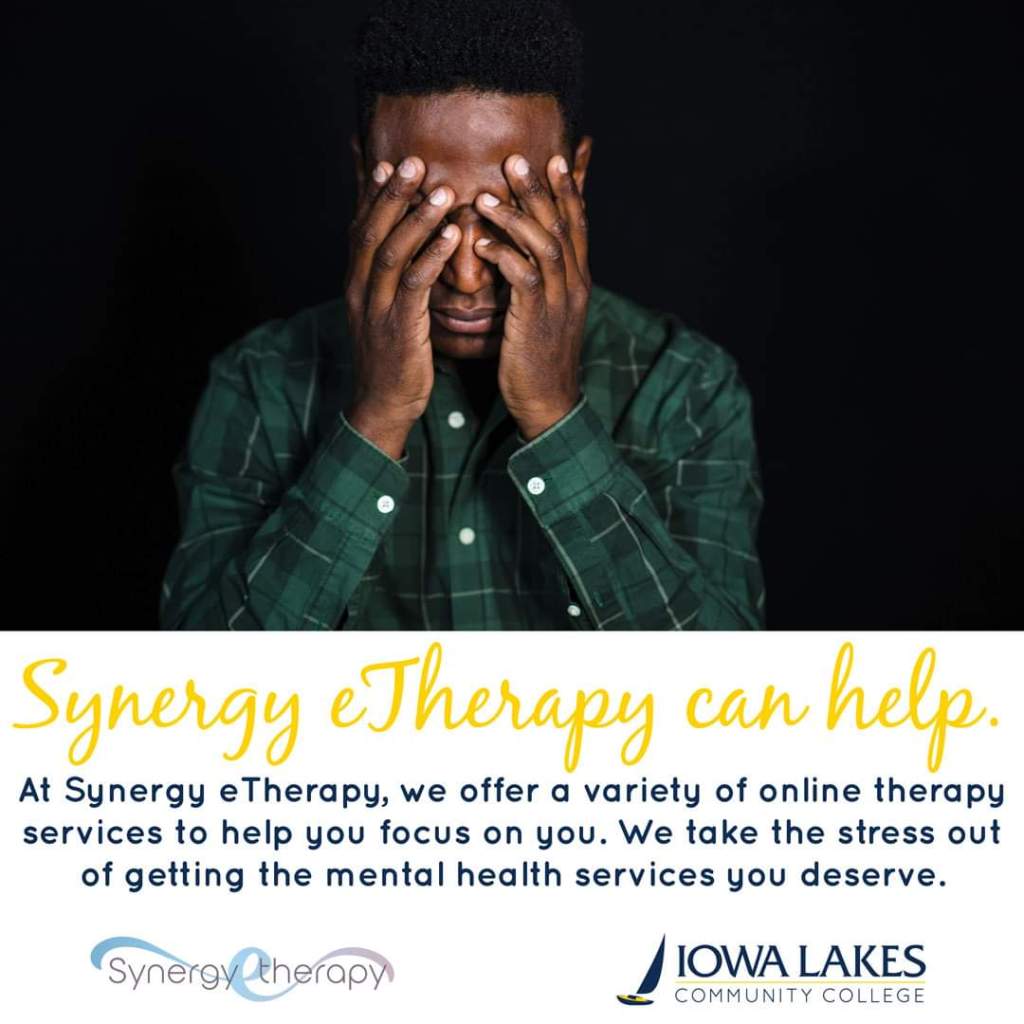
Iowa Lakes’ promotion of e-therapy is not the only strive towards a greater understanding of mental health on campus. TalkCampus provides another form of theory conducted between students.
Jacob Oliver is a graduate assistant at Iowa Lakes. “I help run student housing and assist with coaching for the college’s swim team. I applied to work at Iowa Lakes because I wanted to give back to the institution that gave me so much back when I was a student at the college.” In assistance to other faculty members, he also produces Iowa Lakes’ Wellness Wednesdays videos on Iowa’s Community College Student Life Hub on Facebook—Wednesdays at 11:00.
“These are made to help people improve both their mental and physical wellbeing,” explains Jacob. “Whether we like it or not, our brains control our mindset and our day-to-day emotions. Our brain is part of our body which communicates to the brain, constantly—and you can’t escape your body—so why not take care of your body? How good of sleep you get each night, how often you get headaches, or how stable your mood is, these three things are just a few examples of things we experience which are highly dependent on how we treat our bodies.”
Headaches, mood swings, and sleep shortages also depend on one’s mental health.
Jacob finished, “I exercise and consume less added sugar before bed because these habits improve my sleep while also preventing any future headaches. Getting a good night sleep and not having a headache during the day is absolutely critical if my goal is to bring positive energy into my shared workspace day in and day out. So, there you have it, maintaining my physical health helps improve my workspace, which I’m sure my coworkers appreciate!”
Rachel Higgins, Assistant Professor of Social Science, M.S. at Iowa Lakes was more concise in claiming physical and mental health are interlinked.
“Students can manage their health by keeping a consistent routine of personal hygiene, work, and school. Remember to eat three meals a day and be mindful of nutrition. Exercise and find other outlets for relaxation.” Meditation, music, and yoga are recommended.
 Call of the Lake
Leave a comment