
Morgan Larson, Writer

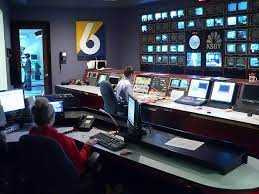
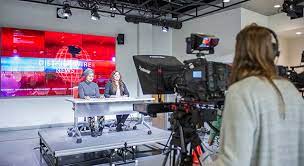
Iowa Lakes Community College (ILCC) prides itself in its students, facility, and programs that enable every aspect to be at its best and to thrive in the hustle and bustle of the real world. ILCC has the privilege of housing an actual, LIVE radio studio (KLCC) for its Digital, Social, and Broadcast Production program.
Although this worldwide pandemic has put a damper on many things, the radio studio stood no chance against COVID-19’s effects a year ago. Fortunately, there is light at the end of the tunnel. The program has reopened its radio studio and is once again providing hands-on learning for its students to thrive once again in the field of broadcasting. Not only are the students excited for this reopened opportunity; so is the program advisor.
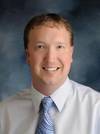
Kevin Tlam is the adjunct advisor for the Digital, Social, and Broadcast Media program at ILCC. Tlam oversees a few of the program’s courses as well as serves as the student’s advisor. Tlam is quite eager about the college’s radio studio and what it means to have its back up and running for his freshmen and sophomores.
It’s important to understand where the ILCC radio station is located. It must be made known of all the different areas it has been located within the Estherville campus. Tlam mentioned that it has switched locations a few times since his student attendance at ILCC. When touching on this matter, Tlam had this to say, “The radio studio has had several locations over the years. When we were notified the Performing Arts Center would be built, we needed to find a new location for the studio. I said if we can move to a room with a window and set up the equipment so they are all connected – I am for it,” he added. The studio ended up moving a few feet down the hall to our present location.
Although the KLCC radio studio did go unused for almost a whole year, Tlam gave some reassurance that even though COVID posed a challenge, the curriculum to the program needed an update. Tlam continues with, “Before the change, we only had one announcing/radio course for a semester. All of us felt one semester in radio and announcing was not enough. Each of us wanted to make that change because we have a lot of people who are not only interested in television or sports play-by-play broadcasting but particularly radio and the equipment.”
Tlam and the rest of the adjacent instructors in the Digital, Social, and Broadcast Production program thought it best to add another radio course as a prerequisite. This would enable students to gain more experience and broaden their comfort level of being on a LIVE microphone, learning the equipment, perfecting one’s announcing ability, and easing into what it takes to be a broadcaster. All of this does not just happen overnight. “It takes practice,” said Tlam.
The Television & Radio Announcing course is being offered this spring as the prerequisite class for the remaining radio studio courses; Radio Workshop I & II. Tlam is confident that as we move forward, so will the radio studio’s availability to its students. “The radio studio will be utilized more as we look ahead to future semesters,” added Tlam.
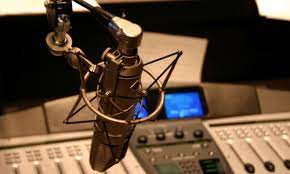
In the Digital, Social, and Broadcast Production advisor’s eyes, Tlam feels that his students can utilize the radio room once again in exciting new ways. “I think the most gratifying part for me is when the students go in there for the very first time and look at the microphone, the equipment, and the computers. They also get to see that empty chair in front of the console. There is a little bit of uneasiness and some nervousness. It can be intimidating as it is an unfamiliar environment,” said Tlam. Everybody can be a little bit apprehensive; even Tlam recalls his first time in the radio studio. “It’s something you don’t ever forget.”
From his perspective, Tlam sees the growth of a student who has never touched radio equipment or spoke into a LIVE microphone. To students who can’t get enough of the radio studio and being on a LIVE mic and honing their new skills and abilities, they may have never thought they would develop.
Tlam eagerly adds, “What is fun is from the first day up to the last day, I get to see that transition when students go in there. Each time they get a little more comfortable and how we learn is two ways, we make mistakes, and we learn from them and practice, and the more we do it, the more comfortable we get doing it, even with everything. I like to see when students start it, and they are getting it, they are like this is not so bad, I can do this.”
Students within the Digital, Social, and Broadcast Production program are set apart from other programs. “One thing that the college has been supportive of and adamant of as well as myself. I do think what sets this program apart from a lot of the other broadcast programs at other college courses is that we want it to be not only a classroom learning experience but also insist on hands-on experience,” said Tlam.
This is a very hands-on profession, and the only way one can truly learn is by physically doing it. There is only so much one can do in a classroom from a textbook and have the radio studio and stream online. However, the radio studio doesn’t have its frequency and tower. It’s still broadcasting LIVE content. Tlam can say that there is always an audience toward the LIVE broadcasts the radio studio produces. “There is still an audience anywhere in the world; it could be 20 people or 20,000 people.”

There is that potential and having that experience of doing a radio show, being on a LIVE mic, and forcing yourself to mentally and emotionally prepare while you are talking, working on your presentation, that is the key. Tlam believes that “hands-on exposure is invaluable.”
Tlam hopes that his students can take away various educational aspects from the program with the radio studio’s help. Tlam goes on to say, “I honestly believe whatever path you take as far as a career, even if it is not in broadcasting, you must be able to communicate well.”
That is the basis for everything. The better you know how to communicate and talk to and with people, the further you will go in life. “I believe that as one of the first things people are going to notice about you, like when you have phone or zoom or F2F conversation,” he added. Communication is vital, which helps lay the foundation for virtually everything in life.
“We are working on speech presentation and how to talk in front of an audience and in a microphone,” said Tlam. “Then it’s to get comfortable by going to the next level of doing that eloquently and putting that individualized touch that is unique to who you are and the people you are doing that for,” he confidently added.
By working in the radio studio, one can work on all that in a combined package. It teaches us multitasking and thinking on our feet because in ways most people do not understand because they only hear us. Still, you are doing a few different things at once as you’re talking. For many people, this can be hard, and it sometimes does not come naturally at first.
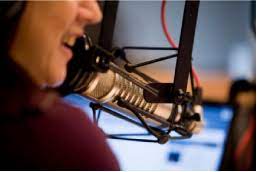
“Those are some reasons why being on a live microphone and having that responsibility is something I take seriously and is always a challenge,” said Tlam. He provides an example of “What can I say into the microphone that can make this matter and have the audience keep listening in day after day?” Tlam believes all this combined is something he hopes gets taken away from using the radio studio.
Digital, Social, and Broadcast Production students can be a group that is split between what they have and haven’t done in the program curriculum, basically comparing first-year students to sophomores. Tlam takes a moment to share his thoughts on how his sophomores feel about being back in the radio room. “I think most of them have been excited to be back there.
“I know that there have been some that the radio part was not their favorite, but they also know they had to be in there as part of the curriculum.” He believes that there is something about doing one’s own radio show, not recorded, but LIVE radio show. Sitting behind that mic and consciously knowing you are talking to an audience is mind-blowing. “There is something about that that gives you a rush, and so I think it has been a positive experience,” said Tlam.
Overall, Tlam could not be more at ease with the convenience of having this radio studio on campus and solely being a part of the Digital, Social, and Broadcast Productions course structure. “I think that it’s invaluable. I could not imagine teaching broadcasting without having a radio studio to the program because it just would not be the full package,” Tlam said confidentially.

This would be very awkward. It would be like trying to teach someone how to be a surgeon, but you do not have someone to operate on. The answer is you cannot teach it. You can do so much in a classroom and learn from the books, but until you do it and do it under the supervision of those who have been there and done it, you cannot get there. It is invaluable.
The fate of the radio studio remaining open for use lies in the hands of the college, and if it came down to a COVID spike, the governor of Iowa could put more restrictions on the COVID guidelines and go into another lockdown if necessary. Rest assured, Tlam has complete confidence the radio studio will remain open. “I had a conversation with the dean at the end of last semester as we were preparing for this semester. I said, “So what are we looking at…what are we planning on?” The dean said, “Really, the only way we would go back on lockdown is if the governor ordered it.”
One can try to predict the future, but there is no way of actually knowing. It could happen, but this year the vaccine is available. People are learning more as a society about the virus. Tlam did touch on what would happen if the state would have to squeeze down on stricter regulations. “At the very least, we may go virtual,” he said. As far as right now the radio studio is to remain open. “We will continue with what we have been doing, and this fall, everything should be back F2F,” Tlam said with the utmost positivity.

Sophomore, Dalton Johnson, a student within the Digital Social and Broadcast Productions, couldn’t be more proud of his college status than be a Laker full of pride for ILCC. Johnson is in his second year with ILCC and the Digital, Social, and Broadcast program. He views the radio studio’s reopening to be an exciting yet nostalgic opportunity to get back to what he is passionate about.
Johnson enrolled in the Digital, Social, and Broadcast Production program of his speech passion and being in the spotlight. “I was involved in a speech in high school, and I always enjoyed getting up in front of people and giving a speech,” said Johnson. “I was also involved in my high schools’ musicals in the fall and spring plays,” he adds. He has always enjoyed being that center of attention, so what better program to enroll in than the Digital, Social, and Broadcast Production program and what its curriculum offers?
When asked his thoughts on the ILCC radio studio, Johnson had this to say, “I love it. It is a great room; it has good state-of-the-art equipment. Kevin does an excellent job teaching us how to use the equipment, especially with the Skyla system. This makes it easy to know how the different mics and controls work.” All of this makes things flow easily and proves to be a studio that few college campuses have, especially for ILCC.
In hindsight, this studio is one of the foundation blocks of this program, and what sets ILCC apart from others it’s size and relatable programs. From Johnson’s perspective, this studio benefits not just him as a student but also the programs itself and the college. “For me, as a student, it’s something different. The radio studio is something that not a lot of colleges like the size of Iowa Lakes has. Many colleges don’t have the radio equipment we have in the radio room.”
“It gives it an extra depth for a college this size to have a radio station room that students can use for a class. One of the things I liked when I visited here was they had a radio station on campus that you could use to get some practical experience,” Johnson added to how he views the radio studio as perceived through the program.
From the college’s standpoint, Johnson sees a more diverse viewpoint to it. “It gives the program more diversity, and it shows that Iowa Lakes takes their programs and training seriously here.”
With Johnson being a sophomore, his time as a freshman will not go unnoticed for his education dedication. The experiences developed with the program and the radio studio prove that this program can set itself apart on so many levels. It is crucial to understand how Johnson compares this experience, positive or negative, to working in the radio studio.
He goes on to say, “I was not in the radio room last year, but I know people who did take the Radio workshop class. From my classmates, you didn’t have to wipe down almost everything in the radio station after they were done, plus when COVID hit and the school shut down, they couldn’t use the radio room.”
This situation had made it tough on the now sophomores and Tlam when the Radio Workshop courses were affected by COVID. “Now that everything is getting back to normal, it’s been fun, especially with the students, and Kevin has enjoyed it so far,” added Johnson.
Johnson believes that the radio studio’s experience can provide the various paths one can take when pursuing a career in broadcasting or journalism. Johnson, at this point, is unsure about his plans after graduating from ILCC and the experiences he has gained through working with the hands-on learning in the radio studio.
He goes on to say on the matter of the future, “I don’t know. The best thing about this degree is that you get your try your hand in so many different broadcasting and journalism avenues, so you don’t know where you want to go. I mean, I don’t know where I want to go because I have enjoyed every aspect of it.”
Johnson is such a dedicated Laker that his experience and knowledge gained from the instructors and course will go far from unnoticed. “I am going to be taking a gap-year at a camp that I work at for the past few years. Just going to do what the Lord provides and see what goes from there. I have enjoyed my time at Iowa Lakes, and I am Laker Proud.”
The radio studio at the ILCC campus in Estherville has been demonstrated through a program advisor and avid student’s thoughts, opinions, and experience. They use their resources to make the ILCC experience worthwhile. It should be mentioned how fortunate ILCC is to have this radio studio.
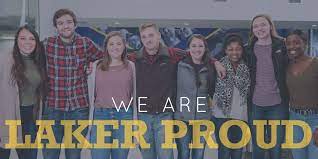
It is a resource that truly makes this program all the more accurate as everything involved in broadcasting and journalism is truly set. This radio studio’s vitality reopening and being used by its student is such an important concept to consider. This is why ILCC is one of the best colleges to get this experience from. That’s why it’s great to be a Laker!
 Call of the Lake
Leave a comment