
Morgan Larson, Writer
Almost everyone has heard the phrase, “A picture is worth a thousand words.” Do pictures have a story to tell when they are taken? Pictures can mean so many different things. Photography can be an art, a hobby, or a way of life. Anyone who is within this field of opportunity can probably tell you that this holds true. For Dave Petrick, it’s been his lifelong career since 1975.
If anyone knows Dave Petrick at Iowa Lakes Community College (ILCC), it is for his remarkable work in Photography. Besides being a CPP (Certified Professional Photographer), Petrick is the Lead Adjacent Instruct for the Photography Program at ILCC. Since 1999, Petrick has “snapped” his way into future Photographers’ lives with the knowledge and needed skillset they need to become CPP’s.
To become a CPP, Petrick, had to pass a written test and submit ten images to a panel of judges. All 10-print had to score at least 70 out of 100 to become a CPP. “I became a CPP on my first try and have been a CPP for over 25 years,” said Petrick, “I have to renew my CPP status every three years by attending continuing education seminars and photography conventions.”
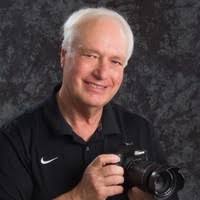
Iowa Lakes Community College
Adjacent Instructor for the Photography Program.
Petrick took an interest in the Photography field when he taught in a 7th grade class in Greenfield, Wisconsin. Petrick used Photography to create shows for his classes, which were used to record school events. One must recall that PowerPoint did not exist at that time. “I used 35mm slide film to create presentations, using Carousel slide projectors,” said Petrick. Along with two projectors, a dissolve unit was used to transition the two projectors’ slides.
From his time creating those slideshows in Greenfield, Wisconsin, Petrick can attest that Photography has come a long way. Photography, according to Petrick, has changed a lot since he started in 1975. Petrick goes on to say, “When I started, I used Kodak CPS film; it was one of the first color negative films. The transition from black and white film to color film was in progress.” During that time, Petrick still offered hand-colored oil portraits. An oiled artist would apply light oil on a black and white print.
“The transition to digital changed everything, in portrait, wedding and photojournalism photography. In film days, color film was sent to the lab for processing and printing, which took about a week. Today finished digital images can be delivered in minutes,” said Petrick.
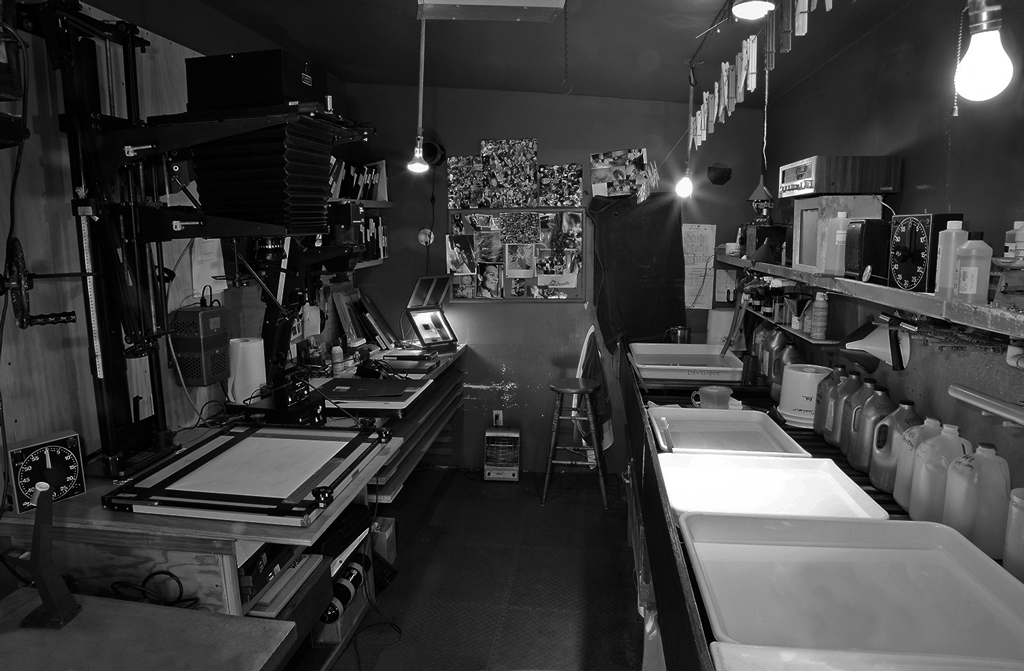
When Petrick worked for the Spirit Lake Beacon, who at the time was printing its newspaper in house, as their darkroom technician/ photographer. Deadlines were tense to meet when reporters brought in film. Film had to be processed and ready for review ASAP; otherwise, they could not meet the deadlines. Petrick added to this process by saying, “The reporters selected the images and indicated the column size they wanted. The negatives were printed to that size through a dot screen.”
These negatives were then pasted onto the pages. The text of the story was also pasted on the page layout. This layout was then sent to the process camera to create the plates, used on the press to print the paper. “Today, all of this is done on computers, and the page files are sent to the printer to be printed,” said Petrick.
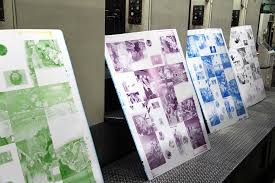
The newspaper’s color images were created by printing three different black and white dot screen images while using red, green, and blue filters, as Petrick had to carry out. “The three prints had to be in perfect register for the print to look good in print. The process camera operator would shoot the three prints to create the color printing plate for the press,” said Petrick. With today’s technology, the entire process Petrick had to endure is now done digitally.
It truly is incredible how Photography has shaped itself into what many of us know it today, especially for those who have seen the changes firsthand. Through all these changes, Petrick has captured and cherished his photos and his experiences of his Photography journey.
As a photographer, you can’t help but wonder what their favorite photos are that they have taken and if they have a story them. It is a way that expresses how images posses timeless moments. Every photo has a meaning behind it, means something much more than what is being shown. Like any Photographer, Petrick has had numerous favorites over the years.
“One of them is a series of black and white images created of Arnold’s Park in the winter, for the Beacon. The photo page earned an Iowa Newspaper Association award,” said Petrick. His other cherished photos are a series of photographs he takes as a part of his Certification Professional Photographer of America, which is a process that is done to become a Certified Professional Photographer. Although none of these photos exist digitally or even have a printed copy, Petrick still cherishes them, nonetheless.
Dave Petrick no doubt has a “photographic memory” when it comes to recalling his career experiences. He was kind enough to provide a couple of his photos for this blog and to go into the story of the photos themselves. It is safe to say that Dave Petrick is a “Master of Photography” at ILCC.


 Call of the Lake
Leave a comment