
Morgan Larson, Writer
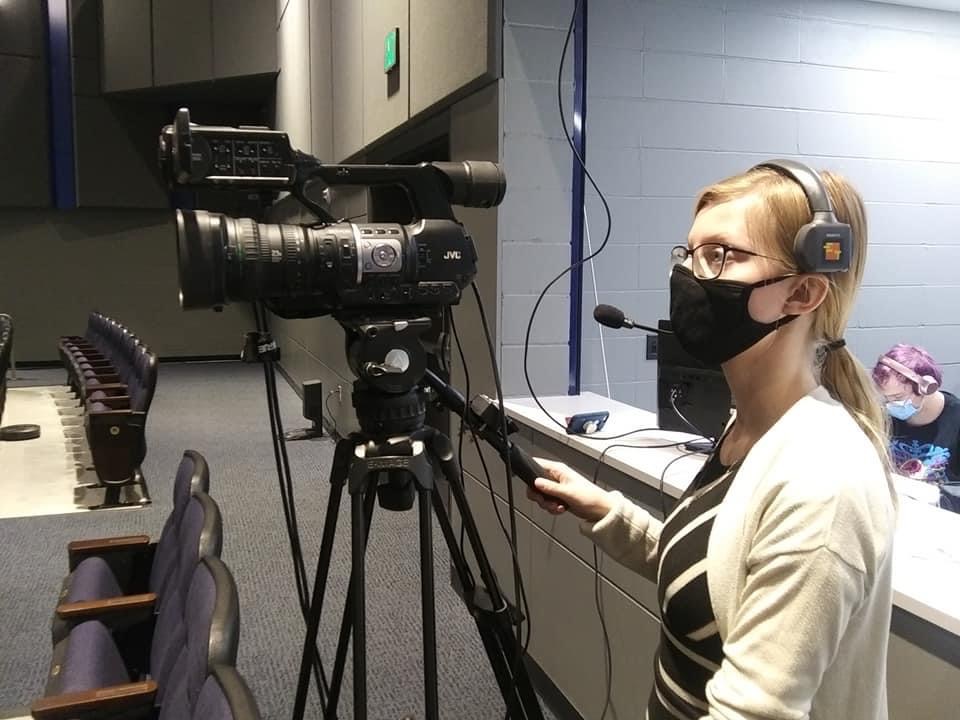
“Camera 5 zoom in right of the flags.” “Camera 6 give me a wide view of the stage.” These were new methods I learned a couple of weeks ago within my Multimedia Productions class. This class is a part of the Digital, Social, and Broadcast Productions program at Iowa Lakes Community College (ILCC). I had no idea what to expect. If I even would be comfortable running a camera for the college’s Veteran’s Day Program. Feelings of anxiety and uncertainty rose when approaching Camera 6. Mind you, this was the first time I have ever worked with a live camera for an event. In the end, I recognized my thoughts on this anxiety, especially what I took away from this experience afterward.
The process of building my knowledge toward camera assembling and controlling the angles and shots was different. This terrified me—thoughts of screwing up and failing all consumed my mind. I didn’t know whether I should retreat or slowly calm myself down and feel how this second process should go if I could even prove myself wrong either way.
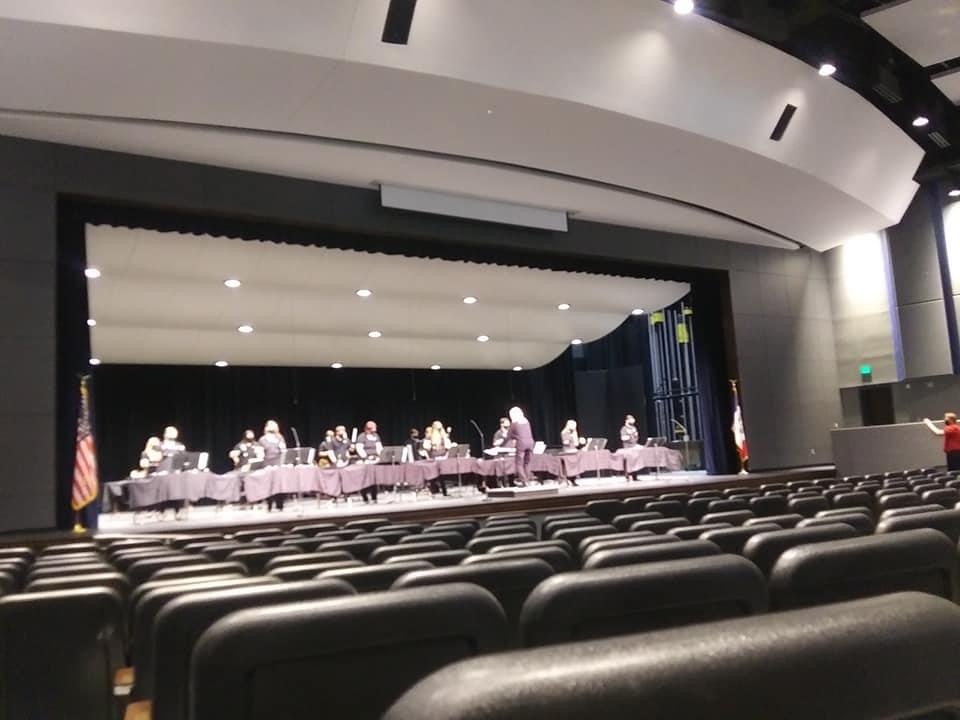
When I walked into the auditorium, where the program was going to occur, I started to panic. Looking at all the equipment, which is somewhat familiar, terrified me. The soundboard, cameras, headsets, the wires, and the microphones all looked like I wasn’t going to do what was asked of me. It was like I was walking into a spot I should already know what to do, right then and there. I remember my mind went blank when Jason White, the professor for Multimedia Productions, asked both camera operators to double-check if a switch was flipped. I felt very foolish, knowing I should know where things should be on a camera, I couldn’t find the switch. I was, momentarily, in shock. Downright embarrassed.
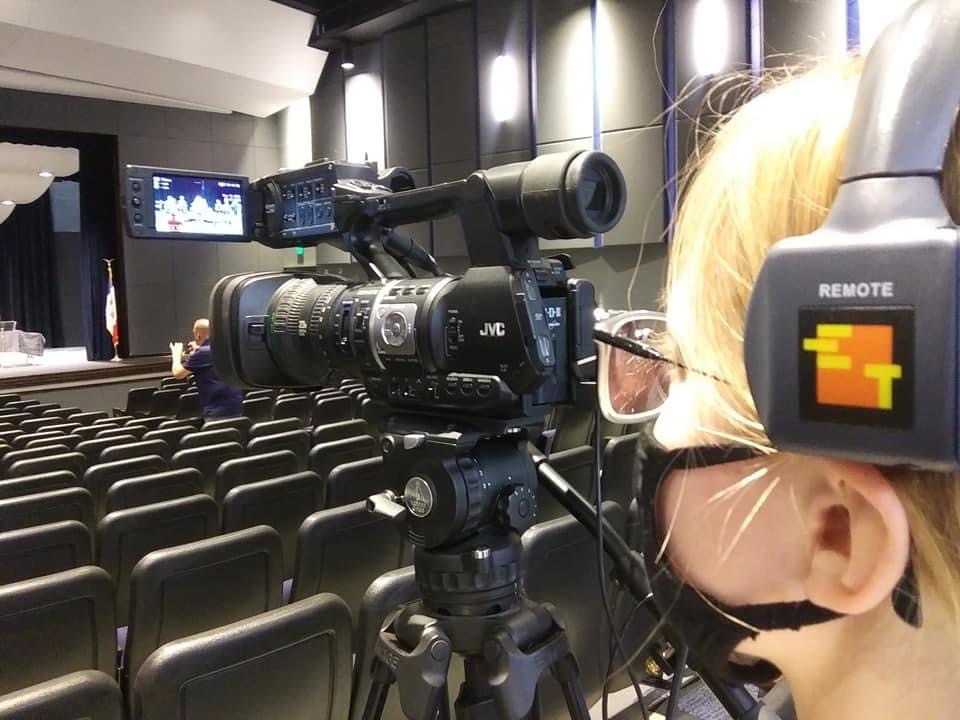
Once the headset was turned on and everyone was ready to go, is when I felt a massive wave of panic wash over me. ‘What do I do if I don’t zoom in too fast or too slow?” “When I do need to move to another shot?” “Will Jason let me know in time?” “Will I ever calm myself down during this?” It’s quite interesting because I am not sure if anyone could tell how I was feeling. I sometimes think my outward appearance can, sometimes, hide what is going on in my head. I am sure most people can do this and maybe even better than I can. When I looked around at my fellow broadcasters, they seemed to be in a state of complete opposites.
The process continued on the first day, as we filmed the guest speakers. Full of fear, I reassured myself to stay on target and remember what camera number I am and be ready for when Jason says anything toward me. Jason instructed each of us when and where to start and stop was a huge factor toward this new thing. Within a few minutes of recording the first guest speaker, I began to relax and realize that this isn’t so bad. I started to work my way to feel comfortable with the camera.
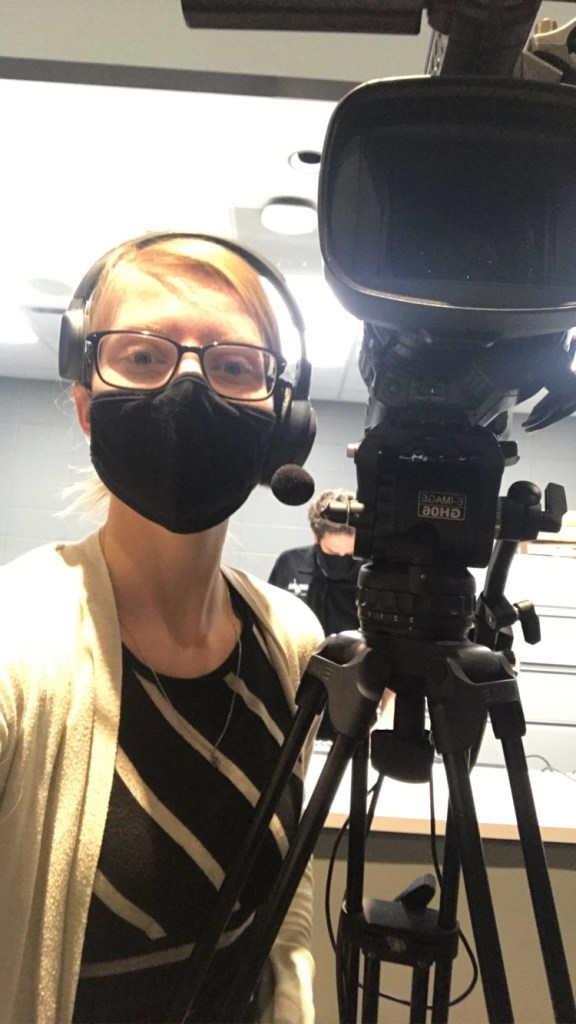
Realizing that I had more control over the situation than I was thinking, the whole process began to feel fun. I began to think I would enjoy doing the second half of the Veteran’s Day Program later that week. As I walked into class to finish up the second day of shooting the program, I was not scared, nervous, or in a state of panic. It was an incredibly fun experience.
The whole experience of being a first-time camera operator was quite a ride. I believe the frightening aspect stems from being put in a position of trying something you have never done before, and you become scared you’re going to fail. Once I was able to find a comfort zone with the camera itself and operating it through Jason’s instructions, my confidence began to rise. When I got home that day, I was so excited to tell and show everyone what I did. It was there I realized how much I enjoyed this experience and that I could build up from this for pending job opportunities. I cannot wait to do more camera work in this class. With time, practice, and knowledge from ILCC, I believe this function could be in my future towards a new career.
Fall 2020, helped broadcast this virtual program. Credit to Jason White, ILCC and DSBP students.
 Call of the Lake
Leave a comment